Ceramic Coating vs. Paint Protection Film — What's the Difference?
Ceramic coating and paint protection film are both designed to protect a vehicle's paint — but they work in completely different ways and protect against completely different things. Confusing the two is one of the most common mistakes vehicle owners make when researching paint protection options. This guide from Ceramic Works LLC in Beckley, WV explains exactly what each product does, where each one falls short, and how to decide which one — or whether both — makes sense for your vehicle.
Not sure which protection is right for your vehicle? Call or text Ceramic Works LLC — most recommendations take less than five minutes.
The Core Difference in One Sentence
Ceramic coating protects your paint chemically. Paint protection film protects it physically. Ceramic coating creates a hard, hydrophobic layer that resists UV damage, chemical staining, and contamination. Paint protection film creates a flexible physical barrier that absorbs impacts, resists scratches, and can self-heal minor surface damage. They solve different problems — which is why many customers use both.
What Is Ceramic Coating?
Ceramic coating is a liquid polymer that bonds at the molecular level to a vehicle's painted surface. Once cured, it forms a hard, clear, hydrophobic layer on top of the paint that resists UV fading, oxidation, chemical staining, water spots, bird droppings, and road grime. The hydrophobic properties mean water beads and rolls off the surface, taking most contamination with it — which makes the vehicle significantly easier to keep clean and reduces the frequency and effort of washing.
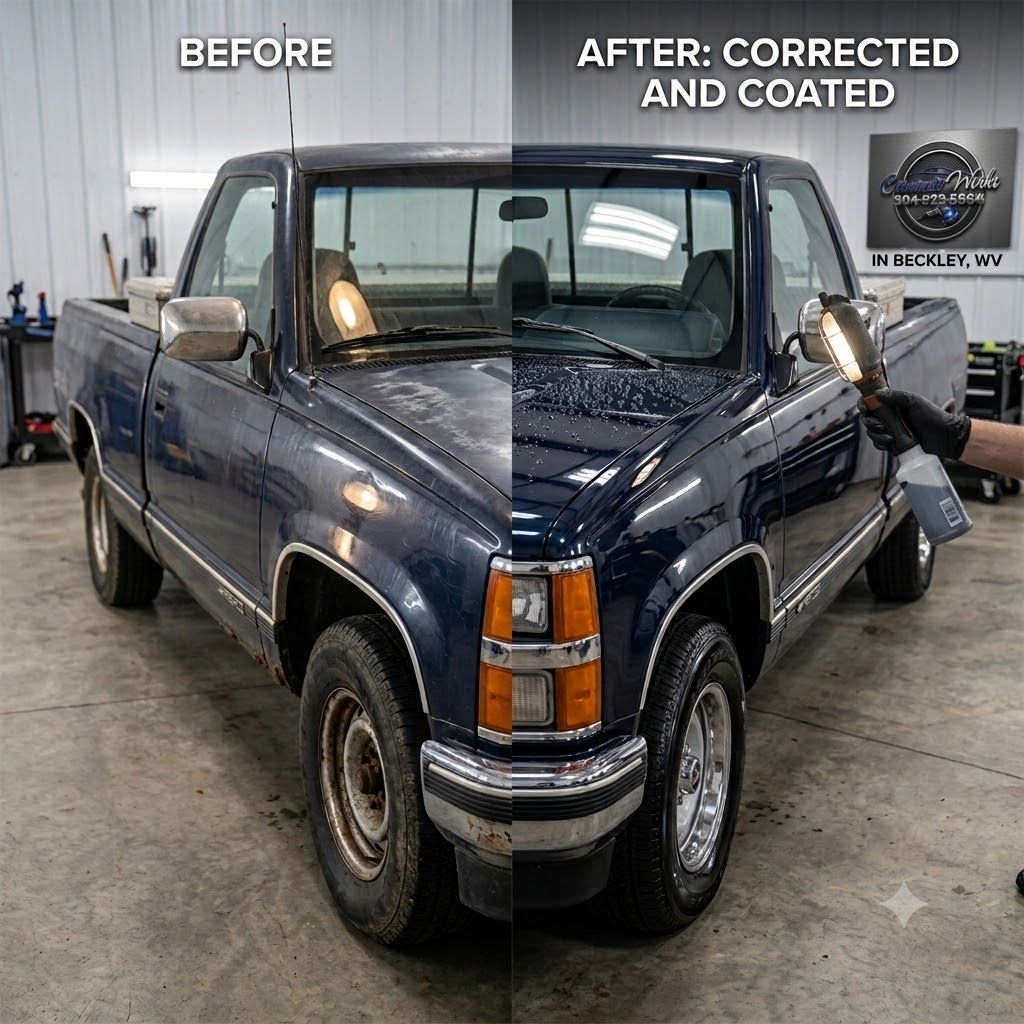
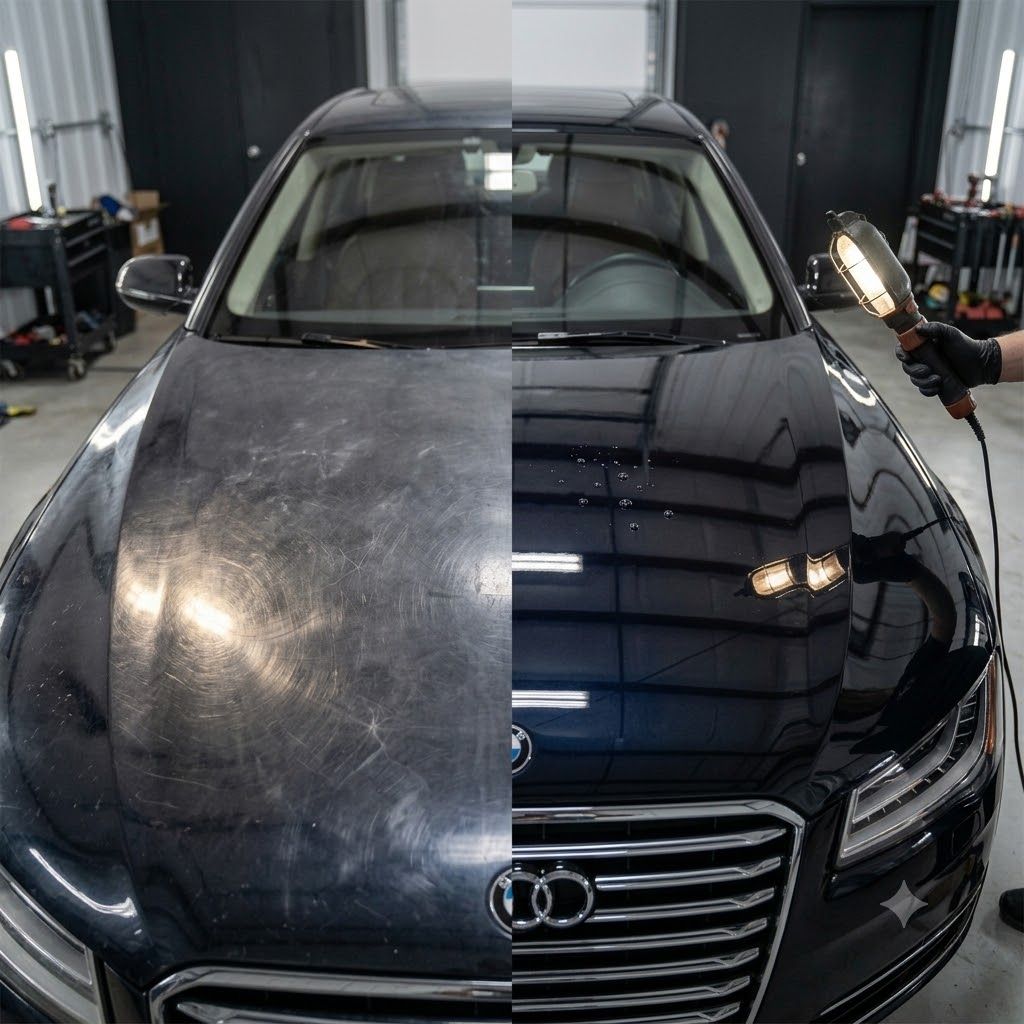
Ceramic coating is a semi-permanent application. It doesn't wash off or break down seasonally the way wax does. At Ceramic Works LLC, ceramic coating is available in 5-year, 10-year, and lifetime coverage levels, with every application requiring a paint correction first to ensure the coating bonds to properly prepared paint and can be warrantied.
What ceramic coating does not provide is meaningful physical protection against rock chips, scratches from road debris, or impact damage. The coating is hard but thin — it significantly outperforms wax on chemical resistance and UV protection, but a rock chip that would penetrate wax will also penetrate ceramic coating.
What Is Paint Protection Film?
Liquid Protection Film (LPF) — also called paint protection film or PPF — is a flexible, clear film applied to paint surfaces that provides physical protection against impact damage. Unlike traditional PPF which is cut from sheets and applied like a wrap, Liquid Protection Film is applied as a liquid that bonds to the paint and cures into a clear, self-healing protective layer.
The self-healing property is one of LPF's most valuable features: minor surface scratches in the film can diminish or disappear on their own, typically with exposure to heat from sunlight or warm water. This means light abrasions from car washes, brush contact, or minor scratches that would show on unprotected paint are absorbed by the film and heal over time rather than remaining visible permanently.
LPF is most commonly applied to high-impact areas — front bumpers, hoods, mirror caps, headlights, and rocker panels — where road debris, stone chips, and gravel strikes are most likely to cause paint damage. It provides a level of physical protection that ceramic coating simply can't match in those areas.
Side-by-Side Comparison
| Feature | Ceramic Coating | Paint Protection Film (LPF) |
|---|---|---|
| Primary protection type | Chemical & UV | Physical impact |
| Resists rock chips | ✗ No | ✓ Yes |
| Self-healing scratches | ✗ No | ✓ Yes |
| UV & fade protection | ✓ Yes — strong | ✓ Yes — moderate |
| Hydrophobic water repellent | ✓ Yes — strong | ✓ Yes — moderate |
| Chemical & stain resistance | ✓ Yes — strong | ✓ Yes — moderate |
| Gloss enhancement | ✓ Yes — significant | Moderate |
| Covers full vehicle | ✓ Typically yes | Usually high-impact areas only |
| Requires paint correction first | ✓ Yes — required at Ceramic Works | ✓ Yes — recommended |
| Can be combined with the other | ✓ Yes | ✓ Yes |
Which One Does Your Vehicle Actually Need?
The answer depends on how the vehicle is driven and what risks it faces most often. For most vehicles in southern West Virginia, the breakdown looks like this:
Ceramic Coating Only
Daily drivers and commuter vehicles primarily concerned with keeping paint clean, protected from UV and road chemicals, and easier to wash. Vehicles that don't regularly encounter gravel roads or high-speed highway debris.
LPF Only
Vehicles where physical impact protection on specific panels is the primary concern — typically front bumpers and hoods on vehicles that see significant gravel road or highway driving — without the full ceramic coating package.
Both Combined
Vehicles driven on WV gravel roads, highway commuters, trucks, or any vehicle where the owner wants comprehensive protection — LPF on high-impact areas for physical protection, ceramic coating everywhere else for chemical and UV protection.
Why Many Customers at Ceramic Works Choose Both
The two products are genuinely complementary. Ceramic coating excels at the things LPF doesn't — gloss enhancement, hydrophobic water repellency, and strong chemical resistance across the full vehicle. LPF excels at the thing ceramic coating can't deliver — physical protection against stone chips and impact scratches on the panels most exposed to road debris.
A common approach at Ceramic Works for customers wanting comprehensive coverage is LPF applied to the front bumper, hood leading edge, mirror caps, and headlights — the areas that take the most direct impact from road debris — with ceramic coating applied across the rest of the vehicle. This combination covers both types of protection without paying for LPF across every panel, which is typically unnecessary for the less exposed areas of the vehicle.
For trucks in particular, this combination is worth considering. Trucks driven on gravel roads or work sites take significantly more front-end impact than passenger vehicles, and the hood and bumper take the brunt of it. LPF on those areas combined with ceramic coating across the cab and bed panels is a practical approach for working trucks that still need to look presentable.
Want to know which combination makes the most sense for your vehicle? Send a few photos to Ceramic Works and describe how you drive — most recommendations are given the same day.
Does Paint Protection Film Require Paint Correction Too?
Yes — the same logic applies. LPF bonds to whatever surface is underneath it, just like ceramic coating does. Applying LPF over paint with swirl marks, scratches, or oxidation seals those defects in under the film. Since LPF is designed to stay on for years and is harder to remove than ceramic coating, the consequences of skipping correction before LPF application are arguably more significant.
At Ceramic Works, any vehicle receiving LPF is assessed for paint condition before application. For vehicles getting both LPF and ceramic coating in the same appointment, the correction work covers both applications — it doesn't need to be done separately for each product.
What About Headlight Protection?
Headlights are a specific case worth mentioning separately. LPF is particularly valuable on headlights because it provides UV protection that significantly slows the yellowing and clouding that develops on headlight lenses over time — a problem that affects appearance and nighttime visibility. Ceramic coating on headlights provides some UV resistance but is less effective at this than LPF.
For vehicles with headlights already showing yellowing, headlight restoration first — to clear the existing oxidation — followed by LPF application is the most effective long-term approach. Ceramic Works offers headlight restoration as part of its detailing services.
Ceramic Coating vs. PPF for West Virginia Driving Conditions
West Virginia's mix of gravel back roads, highway driving, and mountain roads creates a specific set of risks that aren't equally present in more urban areas. Gravel roads produce stone chips and front-end paint impact at a rate that highway-only driving doesn't. Vehicles that regularly travel unpaved or chip-sealed roads in Raleigh County and the surrounding area tend to benefit more from LPF on front-facing panels than vehicles that stick to paved interstates.
At the same time, WV's road salt winters and UV summers make ceramic coating a strong value proposition for every vehicle in the region, regardless of whether gravel roads are part of the daily commute. The two risks are largely independent — chemical and UV exposure affects every vehicle on every road, while physical impact risk varies significantly by driving pattern.
Ceramic Coating vs. Paint Protection Film — Quick Reference
- Ceramic coating: chemical, UV, and contamination protection — full vehicle coverage
- Paint protection film (LPF): physical impact protection, self-healing — high-impact areas
- Ceramic coating won't stop rock chips — LPF is needed for that
- LPF doesn't match ceramic coating on gloss and hydrophobic performance
- Both require paint correction first for best results and warranty coverage
- Most comprehensive setup: LPF on bumper, hood, mirrors, headlights + ceramic coating everywhere else
- For gravel road and highway drivers in WV — combining both is worth the investment
- Ceramic Works LLC serves Beckley, WV and surrounding southern WV at 304-923-5664
Ceramic Works LLC serves customers throughout southern West Virginia including Charleston, Fayetteville, Lewisburg, Princeton, and Shady Spring. Free quotes are available by phone, text, or the contact form — a few photos and a description of how the vehicle is driven is usually enough to give a straightforward recommendation.
Not Sure Which Protection Your Vehicle Needs?
Call or text 304-923-5664 or send a few photos — Ceramic Works will recommend the right combination for your vehicle and your driving habits before you commit to anything.