Can Ceramic Coating Be Applied to an Older or Used Vehicle?
One of the most common assumptions about ceramic coating is that it's only worth doing on newer vehicles. The reality is different. Ceramic coating can be applied to vehicles of any age — the key isn't the vehicle's age, it's the condition of the paint and how thoroughly it's prepared before the coating goes on. Older vehicles often benefit the most from the process, because the combination of paint correction and ceramic coating can restore a finish that's accumulated years of neglect and protect it from continuing to deteriorate. This guide from Ceramic Works LLC in Beckley, WV explains what's involved, what realistic results look like, and how to assess whether your vehicle is a good candidate.
Have an older vehicle you're thinking about coating? Send a few photos to Ceramic Works — they'll give a straight assessment of what's possible before you commit to anything.
The Short Answer
Yes — ceramic coating can be applied to any vehicle regardless of age, as long as the paint is properly corrected first. Age alone doesn't disqualify a vehicle. What matters is the condition of the clear coat, how much defect depth exists in the paint, and whether the surface can be brought to a standard worth coating over. Older vehicles with heavily oxidized or damaged paint often need more correction work — but correction is exactly what makes the coating worthwhile.
Why Older Vehicles Often Benefit the Most
A newer vehicle's paint is typically in reasonable condition — minor swirling from washing, light contamination, minimal UV damage. The correction before coating on a newer vehicle is usually a one-step or two-step process, and the coating protects paint that's already close to factory condition.
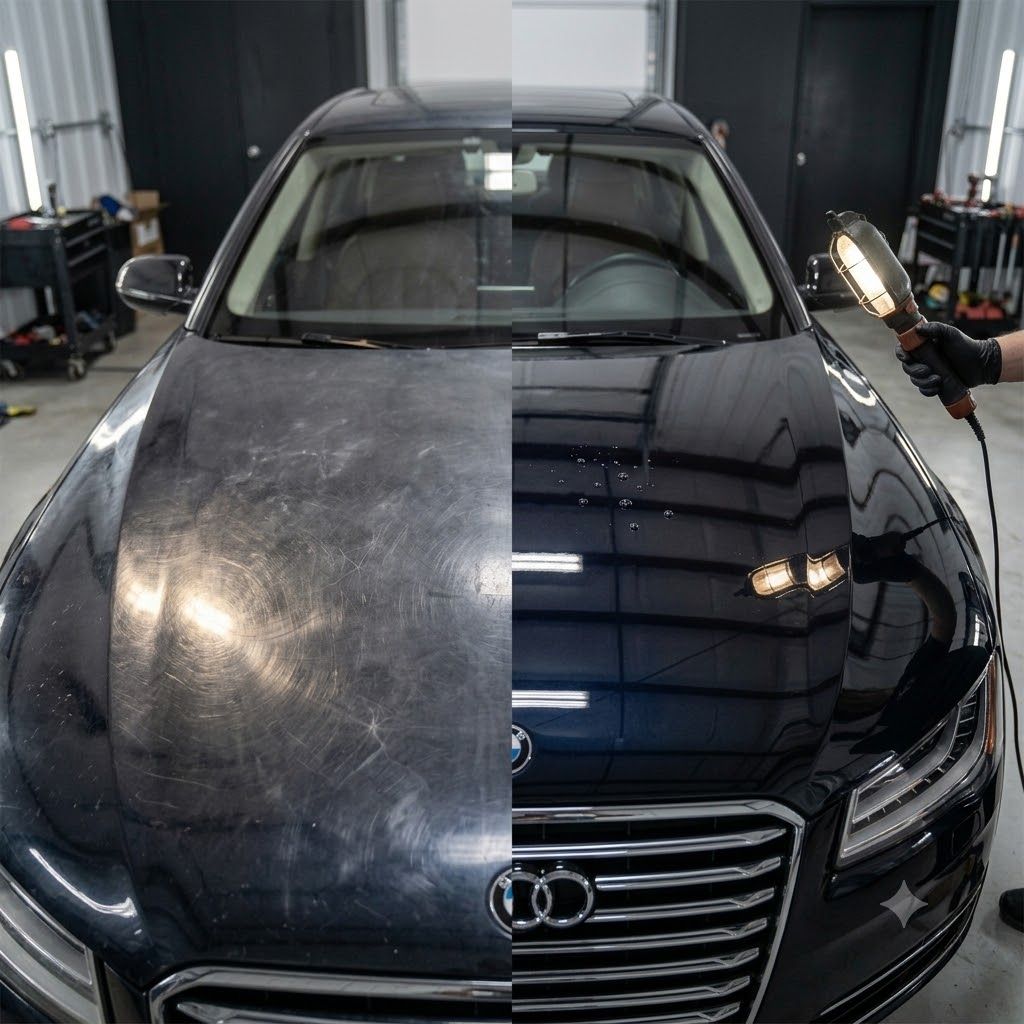
An older vehicle tells a different story. Years of UV exposure, improper washing, road salt, bird droppings, and general neglect accumulate in the clear coat as oxidation, swirl marks, scratches, and dullness. The paint may look faded and tired rather than sharp and glossy. What paint correction does for these vehicles is restore the finish significantly — often dramatically — by removing those accumulated defects from the clear coat before the ceramic coating locks the result in for the long term.
The combination of thorough correction followed by ceramic coating on an older vehicle can produce results that genuinely surprise owners who've watched the paint deteriorate over years and assumed it was beyond recovery. As long as there's sufficient clear coat remaining to work with — more on that below — the process can transform the finish of a vehicle that's been driven and exposed to West Virginia roads for years.
What Gets Assessed Before Coating an Older Vehicle
Before recommending a correction and coating package for an older vehicle, Ceramic Works evaluates a few specific things that are more relevant on high-mileage or older vehicles than on newer ones.
- Clear coat thickness and condition Paint correction removes a thin layer of clear coat with each polishing stage. Older vehicles that have been corrected before, or that have very thin factory clear coat, may have less to work with. A paint depth gauge reading at inspection tells the shop how much correction is safe without burning through the clear coat — and sets realistic expectations on how far the finish can be improved.
- Oxidation depth Light to moderate oxidation — dullness, mild chalking, loss of gloss — is generally correctable with machine polishing. Deep oxidation that has penetrated fully through the clear coat into the base coat is not correctable without repainting those panels. Ceramic Works assesses this before any correction work begins so customers know what's achievable.
- Paint repairs and touch-ups Older vehicles often have body repairs, respray work, or touch-up paint from previous owners. Repainted panels may have different clear coat thickness than factory panels, and touch-up spots may not be compatible with machine polishing. These are noted at inspection and factored into the correction approach.
- Existing surface contaminants Older vehicles accumulate more embedded contamination — iron deposits from brake dust, tar spots, industrial fallout — than newer vehicles. Decontamination before correction is always required, and older vehicles may need more thorough decontamination to get the surface to a clean baseline before polishing begins.
- Overall paint uniformity Vehicles with a mix of factory and repainted panels may produce inconsistent results across the vehicle — factory paint corrects and coats differently than aftermarket paint. This is disclosed upfront so expectations are accurate before the work starts.
Good Candidates vs. Vehicles That Need a Different Approach
Good Candidates for Coating
- Older vehicles with sufficient clear coat remaining
- Paint with oxidation, swirling, or dullness that's correctable
- Vehicles being kept long-term by the current owner
- Trucks and daily drivers with accumulated road wear
- Used vehicles bought recently that need paint restoration
- Any vehicle with intact clear coat, regardless of age
Situations That Need Assessment First
- Clear coat that's peeling or flaking off panels
- Deep oxidation fully through the clear coat to base coat
- Previous poor-quality body repairs or mismatched paint
- Panels with rock chip damage down to bare metal
- Paint so thin from previous corrections that further cutting risks burning through
- Factory paint that's been sanded improperly in the past
The Correction Process for Older Vehicles
The correction process for an older vehicle follows the same steps as any correction job — decontamination, inspection, machine polishing, panel wipe-down, coating application — but typically requires more stages and more time than a newer vehicle in good condition.
- Decontamination wash A thorough wash to remove surface dirt, followed by chemical decontamination to remove embedded iron deposits and tar that have accumulated over years of driving. Older vehicles typically require more thorough decontamination than newer ones before polishing can begin.
- Paint depth and condition assessment Paint thickness is measured across panels to determine how much correction can safely be performed without risk of burning through the clear coat. This sets realistic expectations on correction depth before any polishing starts.
- Multi-stage machine polishing Correction is performed panel by panel. Older vehicles with significant paint wear typically need a two-step or three-step correction to fully address the accumulated defects. Darker-colored older vehicles almost always need a three-step package.
- Panel wipe-down After correction, each panel is wiped with an IPA solution to remove polishing oils and residue, leaving a clean bare surface ready for coating.
- Ceramic coating application The coating is applied to the corrected, decontaminated surface, bonding cleanly and curing to its full rated durability — backed by Ceramic Works' warranty.
Which Correction Level Does an Older Vehicle Typically Need?
Most older vehicles that come through Ceramic Works with accumulated paint wear need at least a two-step paint correction — and darker older vehicles nearly always need a three-step. The more defect depth that has accumulated, the more correction stages are required to fully address it.
| Correction Package | Price |
|---|---|
| One-Step Correction Light swirling on older vehicles in reasonable condition — minimum before coating | $250 |
| Two-Step Correction Deeper swirling, oxidation, and accumulated wear — most common for older vehicles | $500 |
| Three-Step Correction Heavily worn paint, dark-colored older vehicles, maximum restoration | $600 |
| Wet Sanding Deep clear coat scratches or orange peel on specific panels | $300 / panel |
Is Ceramic Coating Worth It on an Older Vehicle?
The honest answer depends on two things: how long the owner plans to keep the vehicle, and whether the paint has enough life left to make correction worthwhile.
For owners planning to keep an older vehicle for several more years — a paid-off truck, a vehicle in good mechanical condition, or a used purchase intended as a long-term keeper — the combination of paint correction and ceramic coating is often a sound investment. Restoring the finish and then protecting it for 5, 10, or a lifetime of ownership stops the ongoing deterioration and significantly reduces how much maintenance the paint needs going forward.
For vehicles being sold or traded in the near term, or for vehicles with paint so far gone that full correction isn't achievable without repainting, the calculus is different. Ceramic Works gives an honest assessment in those situations rather than recommending a service that won't deliver the expected result.
Not sure if your older vehicle is a good candidate? Send a few photos to Ceramic Works — they'll give a straight answer on what correction can achieve and whether coating makes sense.
What About Recently Purchased Used Vehicles?
Vehicles bought used are one of the most common scenarios at Ceramic Works. A new owner picks up a vehicle with accumulated paint wear from the previous owner and wants to bring it back to its best condition before protecting it. This is exactly what the correction-plus-coating process is designed for — removing the history of the previous owner's paint neglect and starting fresh with a protected, properly maintained finish.
Used vehicle purchases from dealers or private sellers are assessed the same way as any other vehicle — photos of the paint in good lighting are the starting point for a correction recommendation, and the shop gives an honest assessment of what the paint can realistically look like after correction before any work begins.
Ceramic Works LLC serves customers throughout southern West Virginia including Charleston, Fayetteville, Lewisburg, Princeton, and Shady Spring. Free quotes are available by phone, text, or the contact form.
Ceramic Coating on Older Vehicles — Quick Reference
- Yes, ceramic coating works on older vehicles — age alone doesn't disqualify
- Paint correction is still required first — more stages typically needed on older paint
- Older vehicles often benefit most — correction restores years of accumulated damage
- Clear coat condition matters — paint depth checked before correction begins
- Deep oxidation through the clear coat is not correctable without repainting
- Most older vehicles need two or three-step correction — $500 or $600
- Best for owners keeping the vehicle long-term — correction + coating is a long-term investment
- Send photos to 304-923-5664 for a free honest assessment before booking
Find Out What Your Vehicle's Paint Can Look Like
Call or text 304-923-5664 or send a few photos — Ceramic Works will give an honest assessment of what correction can achieve and whether coating makes sense for your vehicle.